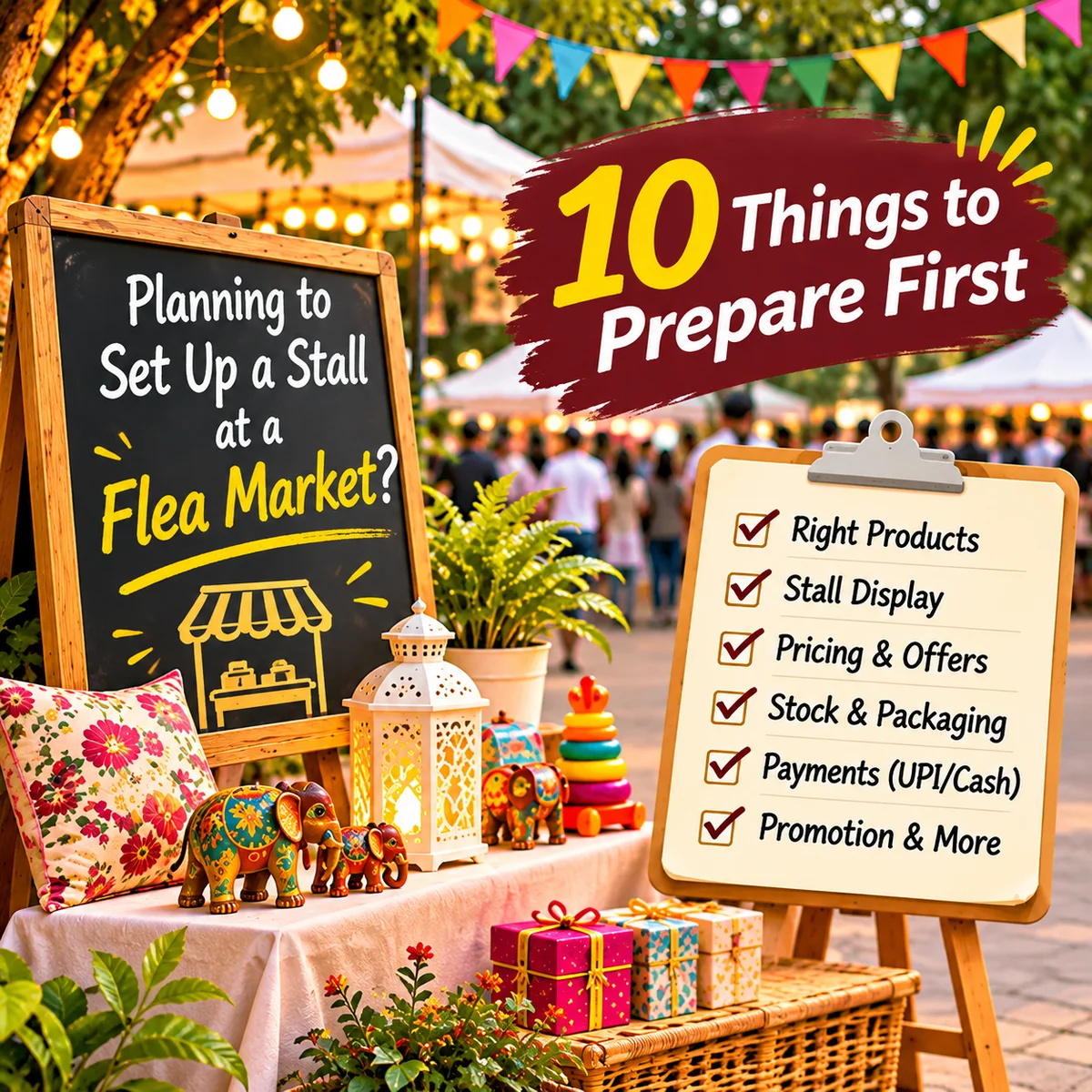
Planning a Flea Market? 10 Things You Must Arrange First
Planning a Flea Market? 10 Things You Must Arrange First
Have you ever thought about organising your own flea market? Imagine bringing together local entrepreneurs, handmade product creators, food businesses, artists and shoppers under one roof.
Flea markets are becoming an exciting opportunity for small businesses to showcase their products, connect with customers and generate additional income. They also give visitors a chance to discover unique products, enjoy local food and experience something different over the weekend.
But before announcing your first flea market, there are several things you need to arrange.
Whether you are planning a small weekend market in Bengaluru or a larger community event, here are 10 essential things you should organise before opening your flea market.
1. Find the Right Venue and Location
Your venue can make or break your flea market.
Look for a location that is easily accessible and has enough space for vendors and visitors.
Consider these factors:
Good road connectivity.
Sufficient parking space.
High visibility and accessibility.
Adequate space for vendor stalls.
Drinking water and washroom facilities.
Electricity availability.
Protection from rain and harsh weather.
In Bengaluru, residential neighbourhoods, commercial spaces, community grounds and suitable event venues can offer interesting opportunities.
2. Decide the Number and Size of Stalls
Before booking the venue, estimate how many stalls you want to accommodate.
For a first-time flea market, starting with 20–30 stalls can be a manageable approach.
Decide:
Standard stall dimensions.
Corner and premium stall locations.
Indoor or outdoor arrangements.
Table and chair requirements.
Electricity requirements.
Space for food counters.
Keep sufficient walking space between stalls. Visitors should be able to explore comfortably without overcrowding.
3. Identify the Right Vendors and Product Categories
A flea market becomes attractive when it offers variety.
Invite vendors from different categories, such as:
Handmade jewellery and accessories.
Home decor and lifestyle products.
Toys and children's products.
Clothing and fashion.
Handmade crafts and artwork.
Plants and gardening products.
Gifts and return gifts.
DIY kits and creative products.
Food and beverages.
Avoid allowing too many vendors from the same category. A balanced mix gives everyone a better opportunity to sell.
4. Arrange Tents, Tables, Electricity and Lighting
Infrastructure is one of the biggest requirements for a flea market.
Make sure you have:
Tables and chairs.
Tents or covered stalls.
Electrical connections.
Extension boards and safe wiring.
Proper lighting.
Signboards and stall numbers.
Dustbins and cleaning arrangements.
Drinking water.
Public washrooms.
If your event is outdoors, plan for rain protection and adequate wind resistance.
5. Obtain Necessary Permissions and Safety Arrangements
Never assume that booking a venue automatically gives permission to conduct every type of event.
Depending on the venue and nature of the event, you may need:
Written venue-owner approval.
Applicable municipal permissions.
Police permission or NOC, wherever required.
Fire safety arrangements and applicable approvals.
FSSAI registration or licence for eligible food businesses.
Music or public performance permissions, if applicable.
Electrical safety arrangements.
Check requirements with the relevant authorities well before the event.
6. Decide Stall Pricing and Prepare a Budget
Calculate the complete event cost before deciding how much to charge vendors.
Common expenses include:
Venue rental.
Stall setup.
Tables and chairs.
Electricity and lighting.
Marketing and promotions.
Security.
Housekeeping.
Event staff.
Signage.
Permissions and contingency expenses.
For example, consider an event with 30 stalls.
Particulars | Amount |
|---|---|
30 stalls × ₹2,000 | ₹60,000 |
Estimated expenses | ₹42,000 |
Potential surplus | ₹18,000 |
These are illustrative figures, not guaranteed earnings. Always account for taxes, unexpected expenses and sponsorship income separately.
7. Build a Strong Marketing and Promotion Plan
Even a perfectly organised flea market needs visitors.
Start promoting at least two to three weeks before the event.
Use:
Instagram and Facebook posts.
WhatsApp groups and communities.
Local apartment associations.
Influencer collaborations.
Vendor cross-promotions.
Local posters and banners.
Event listing platforms.
Introduce participating vendors before the event. Showcase their products and give visitors a reason to attend.
A good promotional campaign should communicate the date, location, timings, attractions and entry details.
8. Add Activities Beyond Shopping
Don't make your flea market just a collection of shopping stalls.
Create an enjoyable experience for families and visitors.
Consider:
Kids' activity corners.
Art and craft workshops.
DIY sessions.
Live music.
Food and beverage counters.
Photography corners.
Interactive games.
Lucky draws and giveaways.
These activities can encourage visitors to stay longer and explore more stalls.
9. Create a Vendor Registration and Management System
Vendor management should be simple and transparent.
Collect the following details during registration:
Business or brand name.
Contact number.
Product category.
Social media profile.
Product photographs.
Stall requirements.
Electricity requirements.
Payment details.
Share the following information with confirmed vendors:
Stall number and dimensions.
Event timings.
Setup and dismantling schedule.
Parking instructions.
Entry passes.
Event rules.
Cancellation and refund policy.
Organiser contact information.
A common vendor database and centralised payment record will make coordination much easier.
10. Build a Reliable Organising Team
Organising a flea market alone can become difficult, especially when managing multiple vendors, visitors and suppliers.
Consider dividing responsibilities among a small team.
Responsibility | Assigned team |
|---|---|
Venue booking | Venue team |
Vendor registration | Vendor team |
Marketing and promotions | Marketing team |
Stall arrangements | Infrastructure team |
Finance and collections | Accounts team |
Event-day management | Operations team |
You can also explore a shared-organiser model where interested individuals contribute towards common expenses and divide responsibilities.
Make sure contributions, decision-making, revenue sharing and accountability are agreed upon in writing.
Bonus: Your Final Flea Market Checklist
Before announcing your event, make sure you have:
[ ] Confirmed the venue.
[ ] Obtained necessary permissions.
[ ] Finalised stall dimensions and pricing.
[ ] Identified vendor categories.
[ ] Confirmed infrastructure suppliers.
[ ] Prepared the event budget.
[ ] Opened vendor registrations.
[ ] Started promotional campaigns.
[ ] Arranged security and housekeeping.
[ ] Created an event-day operations plan.
Conclusion: Start Small, Build a Community and Grow
A successful flea market is not built in a single day. It takes the right venue, enthusiastic vendors, proper planning and consistent promotion.
You don't necessarily need a huge investment to get started. A well-planned event with 20–30 vendors can be a good starting point.
The real opportunity is to create a common platform where small businesses get visibility, local entrepreneurs find customers and visitors discover unique products.
Have an idea for a flea market? Are you a vendor looking for opportunities, or someone interested in sharing the responsibilities of organising an event?
Connect with like-minded people, exchange ideas and explore how a community-driven flea market can become a reality.