Wall Key Holder: Never Lose Your Keys Again
You are halfway out the door when you realise your keys are missing. You check yesterday’s bag, the kitchen counter and the spot beside the sofa—and the morning suddenly gets stressful. A wall key holder can help, but the real fix is giving keys one obvious home and repeating the same small habit every time you walk in.
The setup does not need a large foyer or a complicated organiser. A few well-spaced hooks near your natural entry route can be enough. Place them where household members will actually use them, assign a clear spot to each regular key set, and make returning keys part of arriving home.
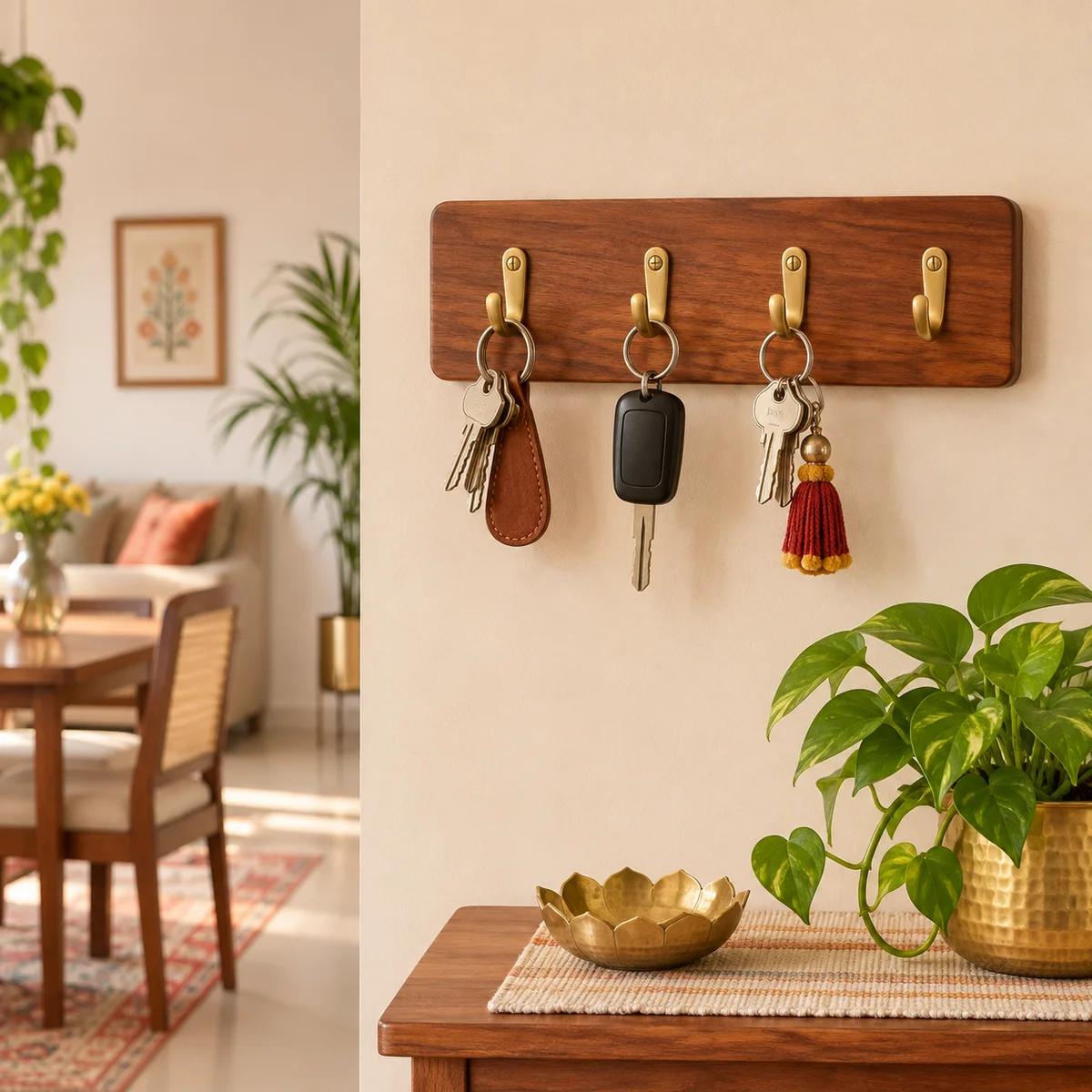
A wall key rack with separate hooks for household keys in a calm entryway
How to organize keys at home with one clear landing spot
Keys are easy to misplace because we put them down while doing something else: carrying shopping, answering a call, helping a child or taking off shoes. If there is no fixed landing spot, the nearest surface becomes the default—and the keys migrate from table to bag to bedroom.
A useful system removes that decision. When the key holder is on the route you already take, putting keys away takes less effort than dropping them somewhere random. The goal is not to remember a new complicated rule; it is to make the right action the easiest one.
Choose a spot you naturally pass
Look at what you do when you enter. Do you come through the front door, a side entrance or the door from the parking area? Choose the wall you pass immediately after closing the door, or the small area where you already tend to drop your bag. A holder across the room may look tidy but will be ignored if it is inconvenient.
Before installing it, check that the door will not hit the holder and that keys will not catch on coats, bags or people passing through a narrow hall. If you rent, check your agreement before drilling and use only a mounting option that suits both the wall and the holder’s weight. Adhesive mounting is not suitable for every surface or load, so follow the product instructions.
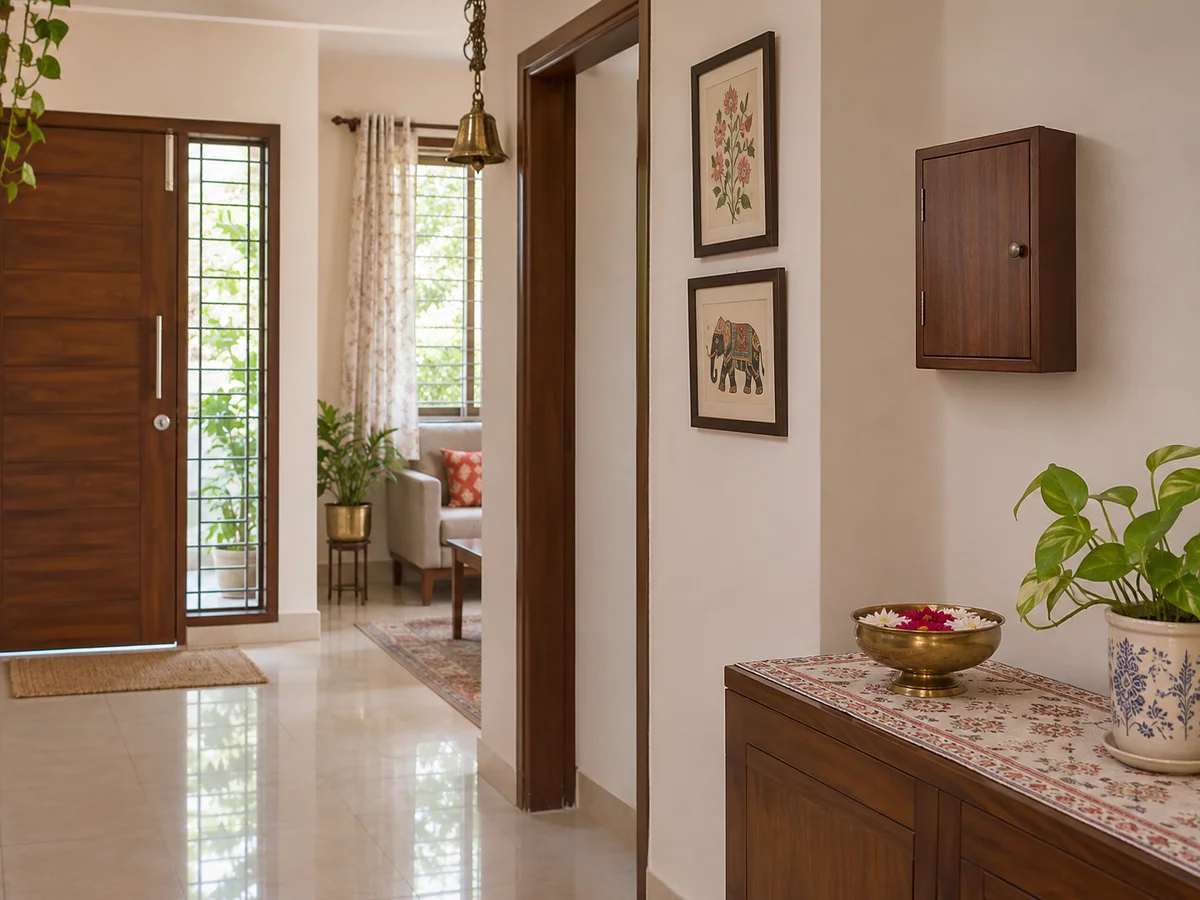
Keep the holder easy for residents to reach, but avoid placing house or car keys where they can be seen or reached from outside through a window, open doorway or letter slot. Police.uk recommends keeping keys out of view while still somewhere residents can quickly find them. Read the official guidance.
Give every regular key set a home
Count the sets that are used most days: house, gate, vehicle, office or shared utility keys. Give each set its own hook. If several people share the holder, use positions that are easy to remember—one hook per person, or one row for home keys and another for vehicle keys. A small label can help, but avoid labels that reveal your address or make it easy for a stranger to identify what a key opens.
Leave a little room for a spare set or a new household member, but do not hang every rarely used key in the most visible spot. Keep emergency and seldom-used keys in a separate, secure place that household members know about. Do not leave a spare key hidden outside in an obvious place.
Bulky fobs and long keychains need more clearance than a single key. Test the spacing with your actual key rings before deciding that the holder has enough hooks. If keys overlap, assign the wider bundles to hooks at the ends or choose a rack with more space.
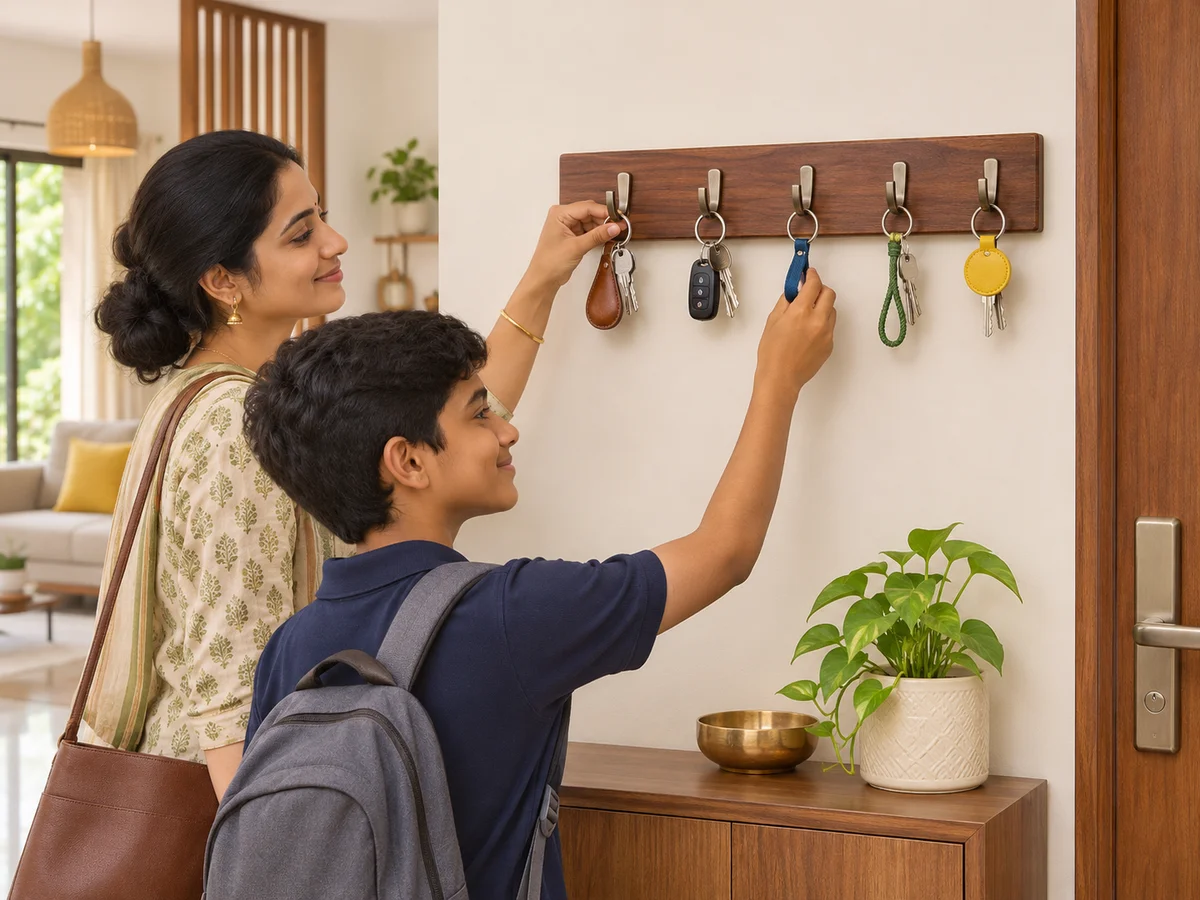
Build the “keys go here” routine
A key holder only prevents lost keys if people use it consistently. Keep the routine simple:
Come inside and put keys on the assigned hook. Do it before setting down bags or starting another task.
Return keys immediately after using them. Avoid carrying them to another room unless there is a clear reason.
Reset the entryway once a day. Put stray keys back and clear objects that block the hooks.
Do a quick check before leaving. Use the hook as a visual reminder, then take only the set you need.
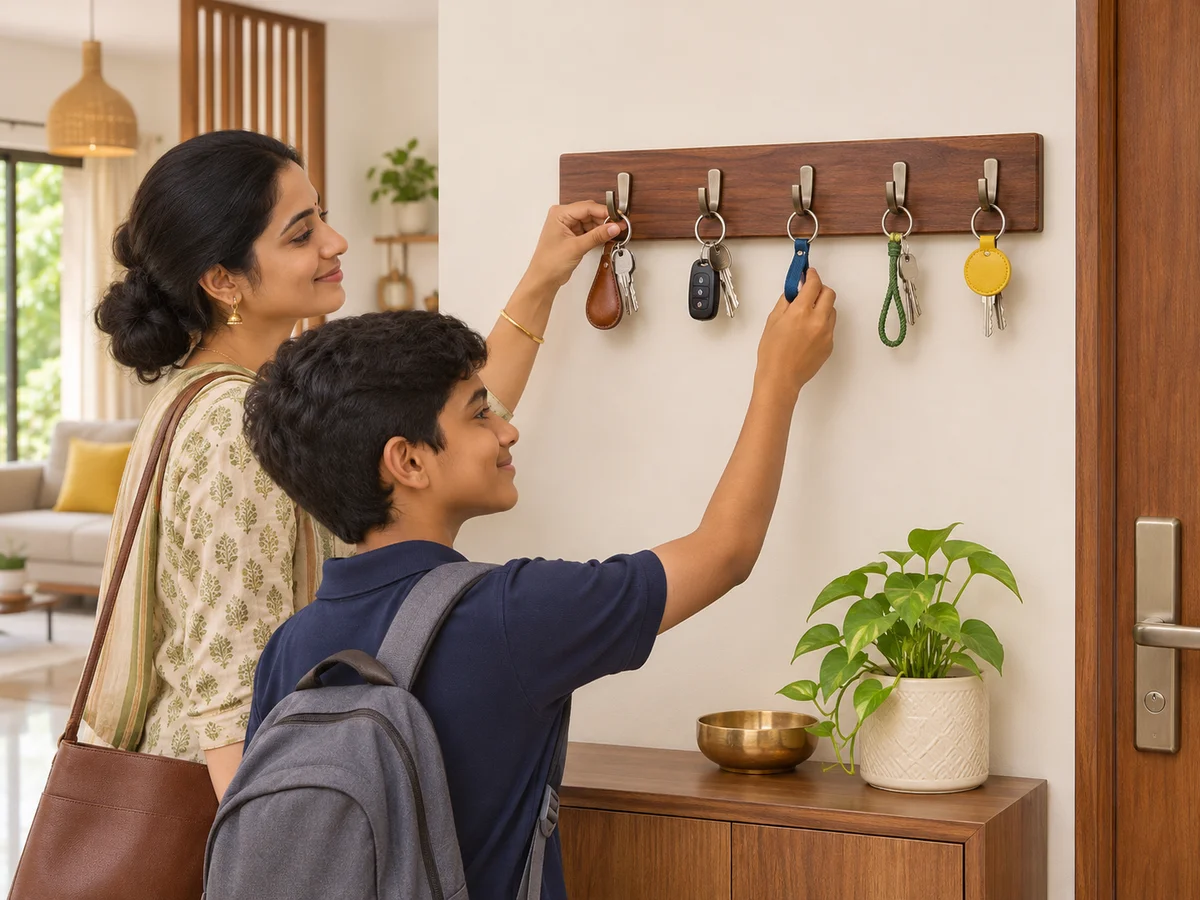
For children or shared homes, agree on the same rule together. If someone regularly forgets, move the holder closer to their entry route or make their hook easier to spot. A system that fits the household is more likely to last than one that looks perfect in a photo.
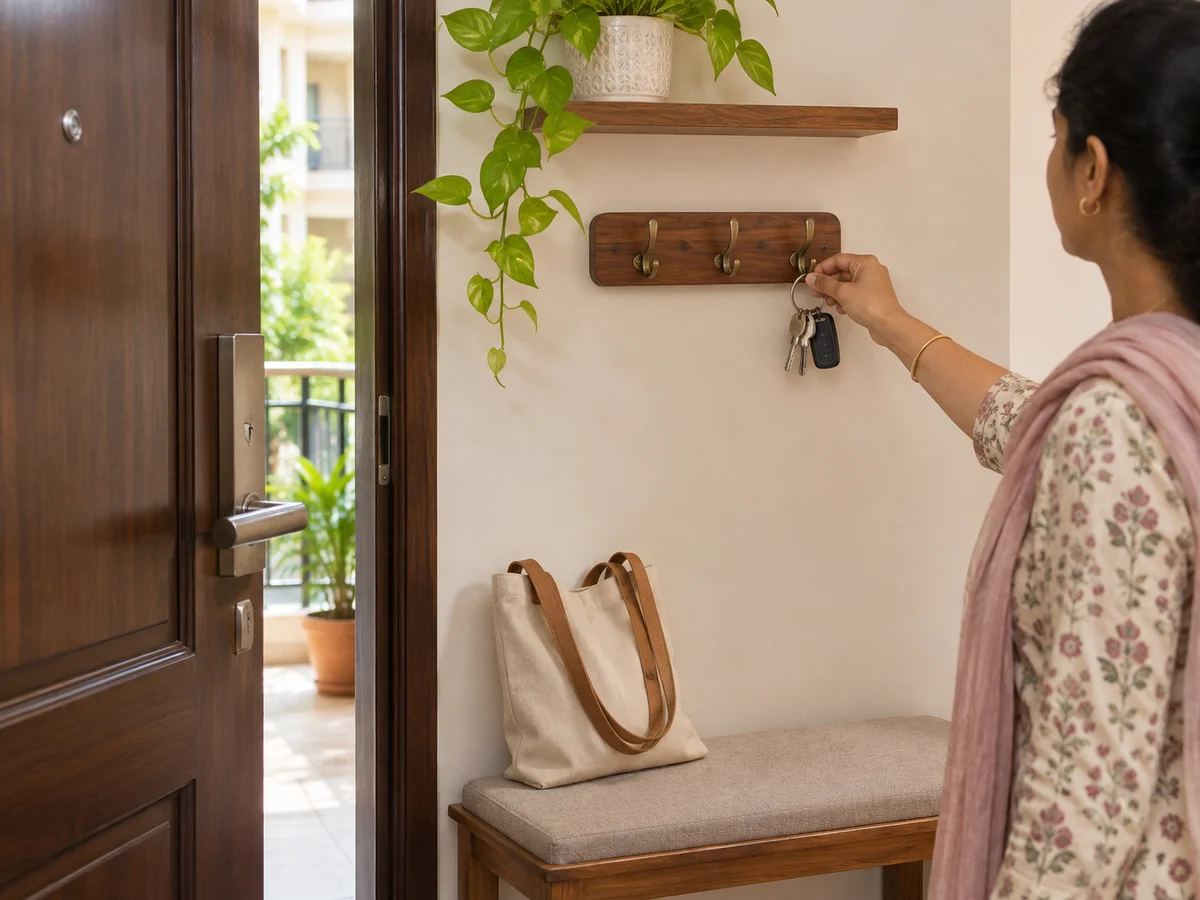
Keep the drop zone small
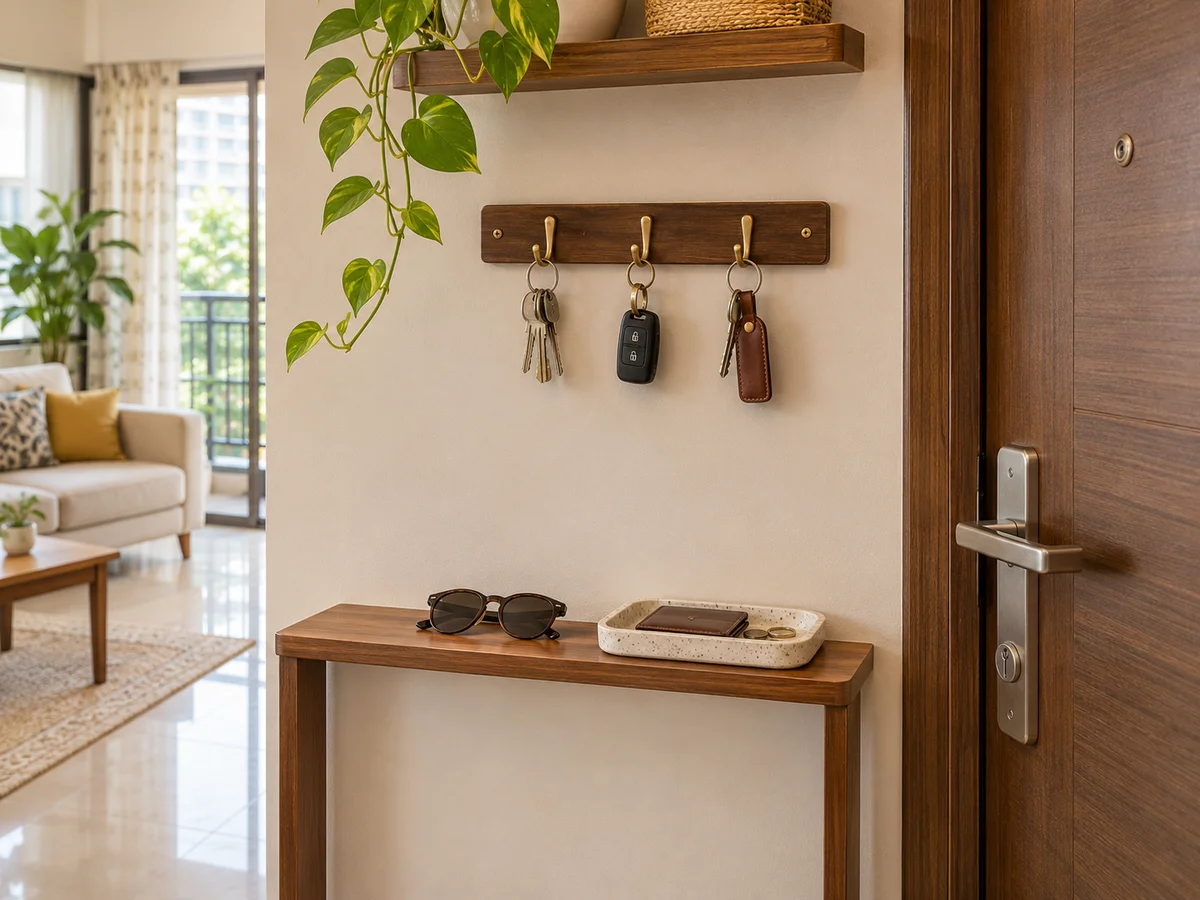
Some wall organisers include a shelf for a wallet, sunglasses, mail or small accessories. That can be useful if those items also tend to go missing. But a broad “everything shelf” can become a clutter pile and make the keys harder to see. Add only what you reach for on the way out, and give each item a defined spot.
For a compact entryway, a few hooks and a small tray may work better than a deep organiser. The tray can hold loose change or an access card, while the hooks keep keys visible to the household. Keep important documents, valuables and anything that identifies your home away from an open display.
What to do when a key is still missing
Check the assigned hook first, then retrace the last routine: which door did you use, what bag did you carry and where did you put down your things? Once found, return the key to its hook rather than leaving it in the discovery spot. If a key is genuinely lost outside the home, consider whether it could be linked to your address or access point and take appropriate security steps.
For keys that are often misplaced outside, a tracker attached to the key ring may provide an extra layer of help. It does not replace the home routine, and device compatibility, battery life and privacy settings vary, so check those details before choosing one.
Quick setup checklist
Pick the entrance you use most and a spot you pass naturally.
Check wall space, door movement, hook clearance and mounting instructions.
Assign one hook to each everyday key set or household member.
Keep keys out of outside view and away from reach through doors or windows.
Add only a small tray or shelf for items you actually use when leaving.
Practise the return-and-reset routine for a week, then adjust the location if needed.
At a glance
Problem | Helpful adjustment | |
|---|---|---|
Keys land on different surfaces | Put the holder on your natural route inside the entrance | |
Family members mix up key sets | Give each person or key type a dedicated hook | |
Key rings overlap | Check hook spacing with bulky fobs and tags | |
Holder is ignored | Move it closer to the spot where people already drop bags | |
Entry shelf becomes cluttered | Limit it to a few daily essentials and reset it regularly | |
Keys are visible from outside | Move the holder out of the sightline while keeping it convenient indoors | |
Rented wall cannot be drilled | Check lease terms and product-approved mounting options |
Where should I put a wall key holder?
Place it near the entrance you use most, on a route you naturally pass when coming inside. Check that the door, coats and bags will not block it, and keep keys out of outside view or reach.
How do I get my family to use the key holder?
Give each person or key set a clear hook and make returning keys the first step after entering. If people keep forgetting, move the holder closer to where keys are currently being dropped.
How many hooks should a wall key holder have?
Count everyday key sets, not just household members. Include shared gate or vehicle keys and allow a little spare space, while making sure bulky fobs do not crowd neighbouring hooks.
Are adhesive wall key holders good for renters?
They may suit some lightweight uses, but compatibility depends on the wall finish, product rating and instructions. Check lease terms and never exceed the stated load limit.
Should I hang car keys near the front door?
Keep keys convenient for residents but out of sight and away from places where they could be reached from outside. For extra security guidance, consult your local police service.
Make the habit easier than the search
A wall key holder works best when it is visible to the people who use it, positioned on their natural route and organised around real key sets. Give every regular set a place, return it as soon as you come home and keep the surrounding drop zone simple. After a few days, the hook should become the first place you look—and the last place you leave your keys.
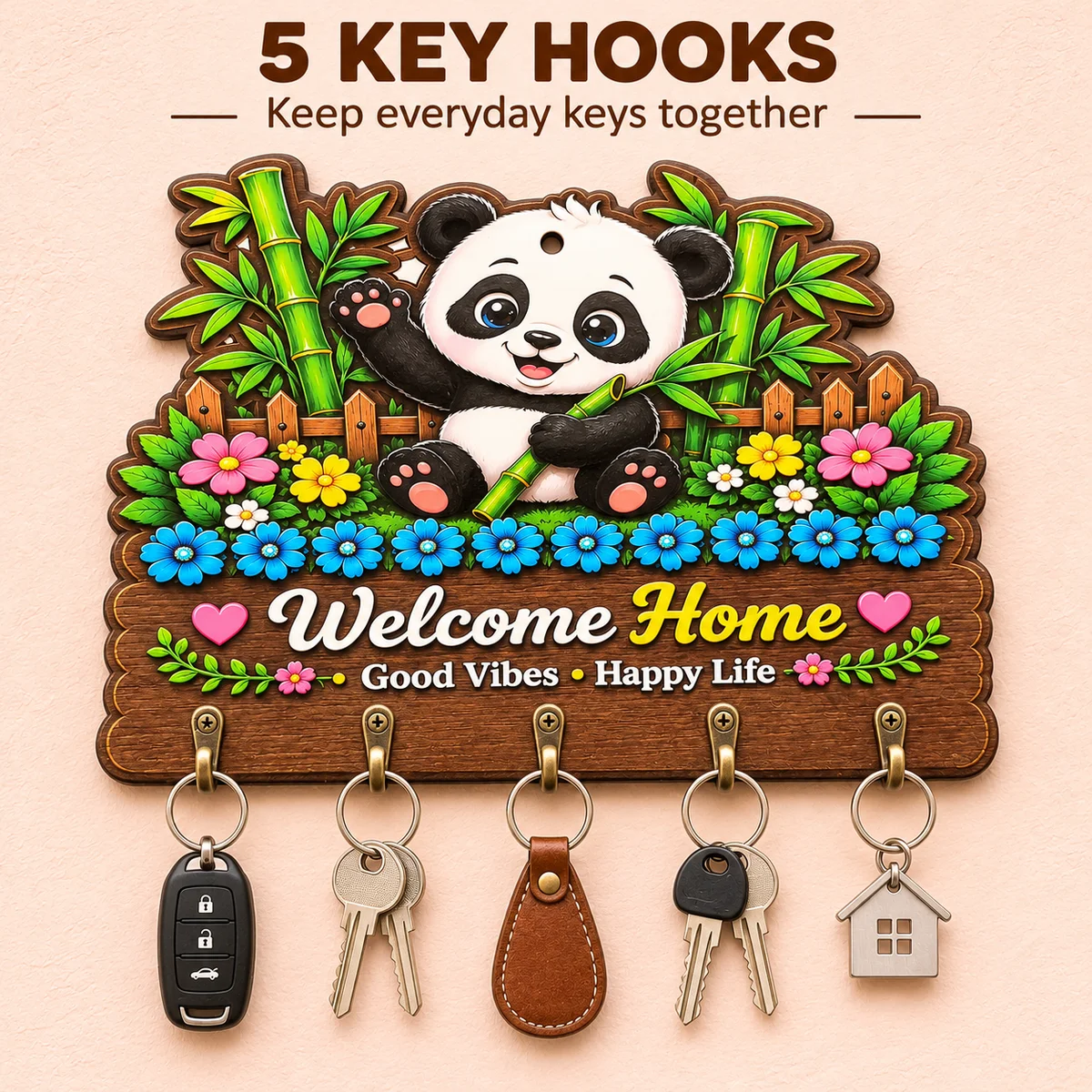
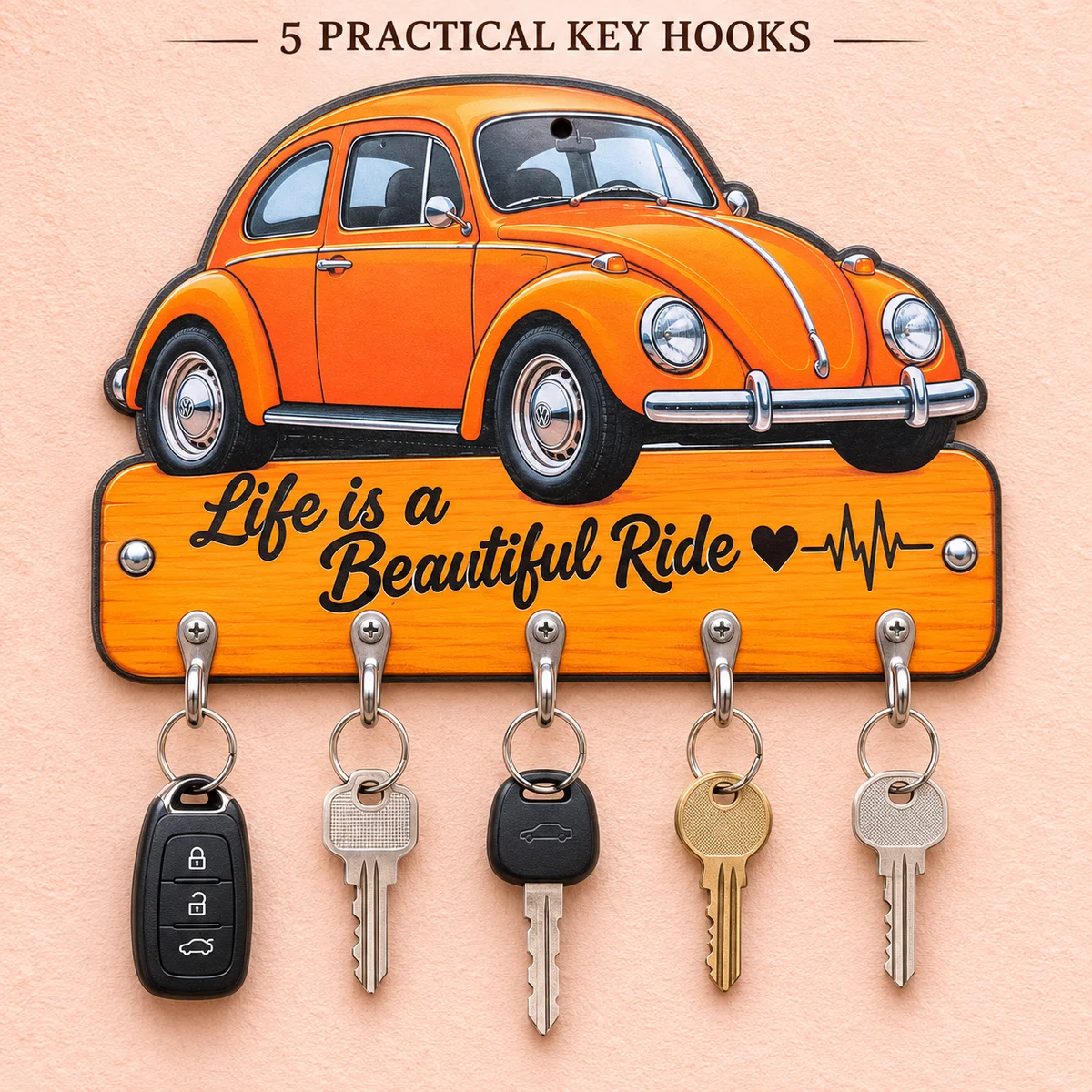
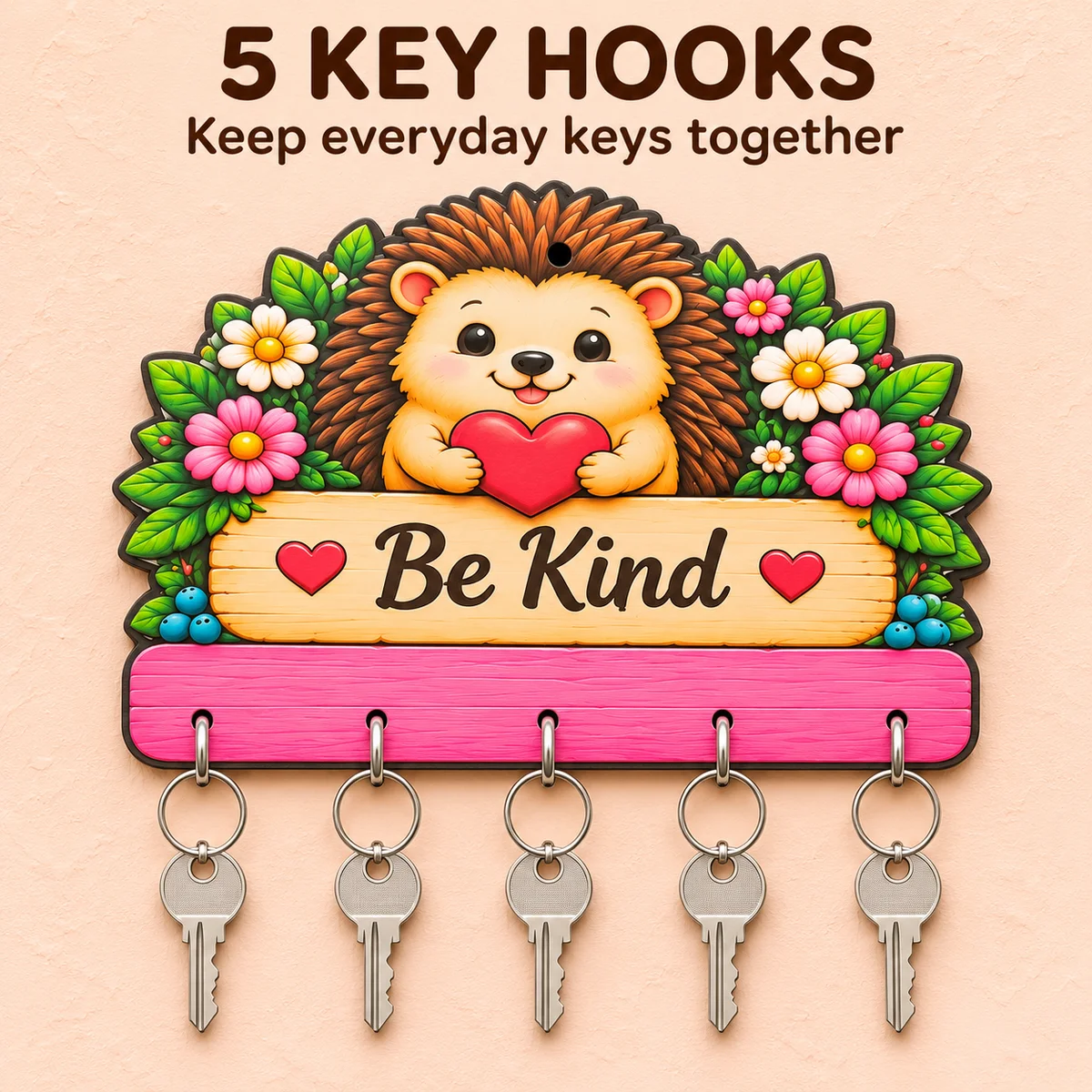
Explore Cute and Attractive Key Holders from Decoblnd
 |  |  |